
Roof Lights : Types, Benefits & Installation
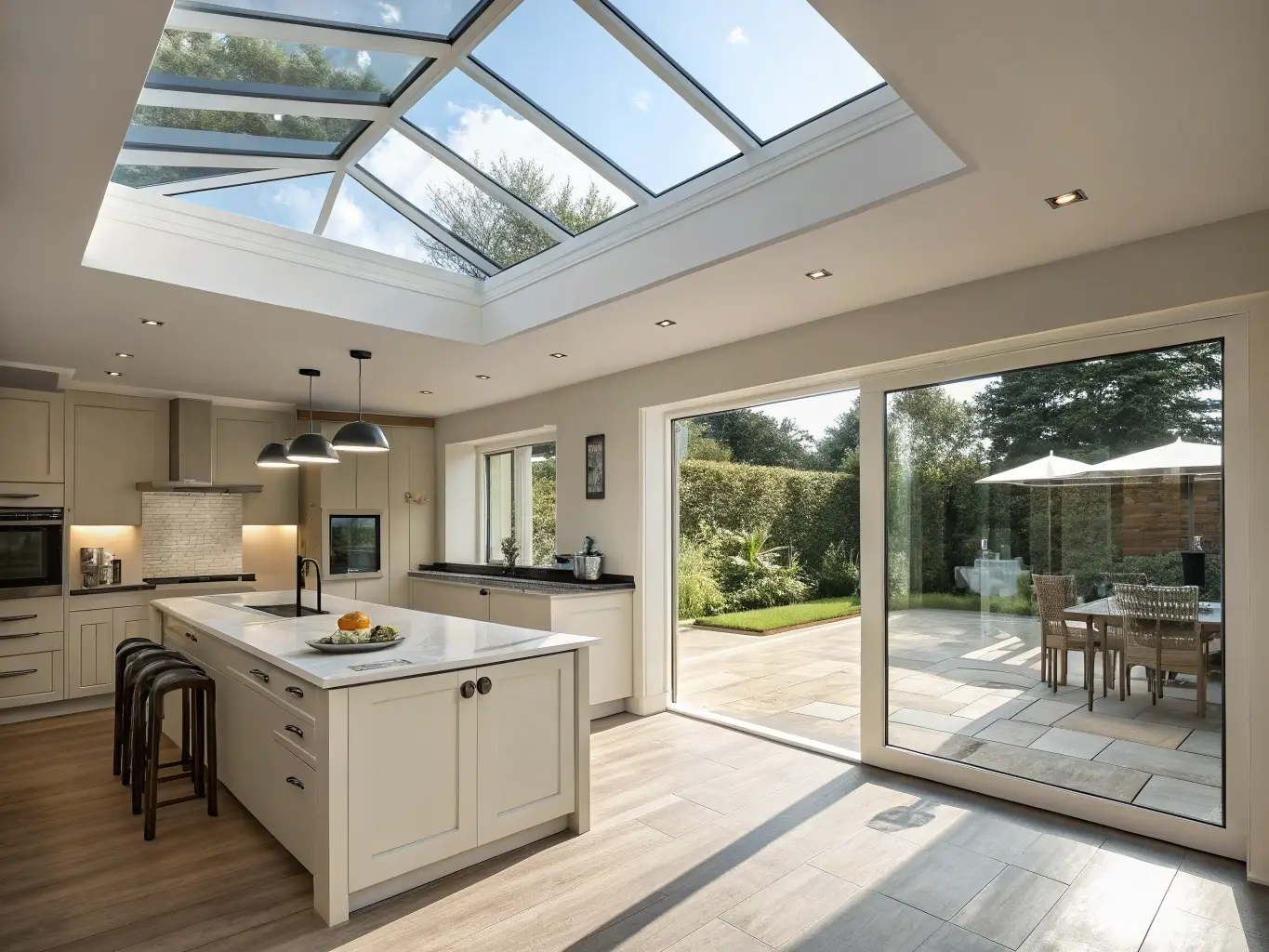
A well-designed roof light can turn a dark extension, kitchen or hallway into a brighter and more welcoming space. This guide explains the main types of roof lights in Croydon, the benefits they offer and the details to check before installation.
Quick answer: Flat roof lights suit clean contemporary extensions, roof lanterns create a stronger architectural feature, and frameless glazing provides the most minimal appearance. The right choice depends on roof construction, room layout, thermal performance, drainage and the amount of daylight required.
What this roof light guide covers
- Popular roof light types
- Benefits for homes and extensions
- Glazing, comfort and safety
- Survey and installation factors
- What affects the final cost
- Frequently asked questions
Types of roof lights for Croydon properties
Roof glazing is not a one-size-fits-all product. A Victorian terrace extension, a modern new build and a commercial property may require very different proportions, kerbs and opening systems. Start with the room and roof structure, then select the style.
Flat roof lights
Flat roof lights sit neatly above the roof and are a popular option for rear extensions. Their low-profile appearance works well with modern architecture, while a large pane can distribute daylight across kitchens and dining areas. A carefully detailed kerb and drainage design are essential for reliable performance.
Roof lanterns
A roof lantern rises above the roofline and becomes a visible feature inside and outside the property. It can add height and a sense of volume to a large room. Slim frames help maximise the glass area without making the structure look heavy.
Frameless and structural glazing
Frameless roof glazing is chosen for a clean, minimal finish. Glass-to-glass junctions and concealed support details can create an almost uninterrupted view of the sky. These systems need precise specification and professional installation because tolerances, glass build-up and weatherproofing are critical.
| Roof light style | Best suited to | Design character |
|---|---|---|
| Flat roof light | Kitchens, hallways and modern extensions | Low profile and minimal |
| Roof lantern | Larger open-plan rooms | Architectural and spacious |
| Frameless glazing | Bespoke contemporary projects | Clean and highly refined |
| Opening roof light | Rooms needing extra ventilation | Practical with manual or powered control |
Benefits of adding a roof light
More useful natural daylight
Light from above can reach parts of a room that ordinary wall windows may not illuminate. This is especially helpful in deep rear extensions, internal dining areas and corridors. The result can feel more open without changing the room’s footprint.
A stronger connection to the outdoors
A clear view of the sky introduces changing daylight throughout the day. When roof glazing is coordinated with sliding doors or windows, it can make the entire extension feel better connected to the garden.
A cleaner architectural finish
Modern slimline frames suit both contemporary homes and sensitive updates to older properties. Frame colour, internal plaster details and the size of the opening can be coordinated with the rest of the glazing package.
Glazing, comfort and safety details
Good roof glazing must do more than admit light. Ask about the complete glass specification, including thermal performance, solar control, safety glass and the edge spacer. The correct combination helps manage winter heat loss, summer heat gain and condensation risk.
- Thermal performance: Compare the full product specification, not only the centre-pane value.
- Solar control: Consider room orientation, glass area and shading to reduce overheating.
- Safety: Use the appropriate toughened or laminated glass build-up for overhead glazing.
- Maintenance: Confirm access for cleaning and whether a suitable easy-clean coating is available.
- Ventilation: Decide whether a fixed unit is enough or an opening version would improve airflow.
What happens during survey and installation?
A professional survey confirms the structural opening, kerb size, roof finish, falls, drainage route and access. It also checks how the internal plaster line will meet the frame. Accurate measurements matter because even a high-quality roof light can perform poorly if the upstand or weatherproofing is incorrect.
- Discuss the room, preferred appearance and daylight goals.
- Survey the roof structure, opening and access conditions.
- Confirm glass, frame colour, fixed or opening operation and internal finish.
- Prepare the kerb and weatherproofing details.
- Install, seal and inspect the unit before completing internal finishes.
What affects roof light cost in Croydon?
The final price depends on size, glass specification, frame system, opening mechanism, access, lifting requirements and the condition of the roof opening. Bespoke frameless glazing normally requires more design and installation work than a standard fixed unit. For an accurate figure, request a measured quotation rather than relying on a generic online estimate.
Roof lights Croydon FAQs
Do roof lights make a room too hot?
They can increase solar gain if the glass area and orientation are not considered. Solar-control glazing, sensible sizing, ventilation and external shading can help create a more comfortable result.
Can a roof light open for ventilation?
Yes. Depending on the system, opening units may use manual, electric or smart controls. Rain sensors and remote operation can be useful for hard-to-reach installations.
Will I need planning permission?
Requirements depend on the property, location and scope of work. Listed buildings, conservation areas and prominent roof changes may need special approval. Check with the relevant local authority or planning professional before work starts.
Plan your roof light with 4Moon Windows
Explore our roof light range or request a free consultation for a tailored survey and quotation in Croydon and South London.